Example polls
Paste any of these into the message box in Slack.
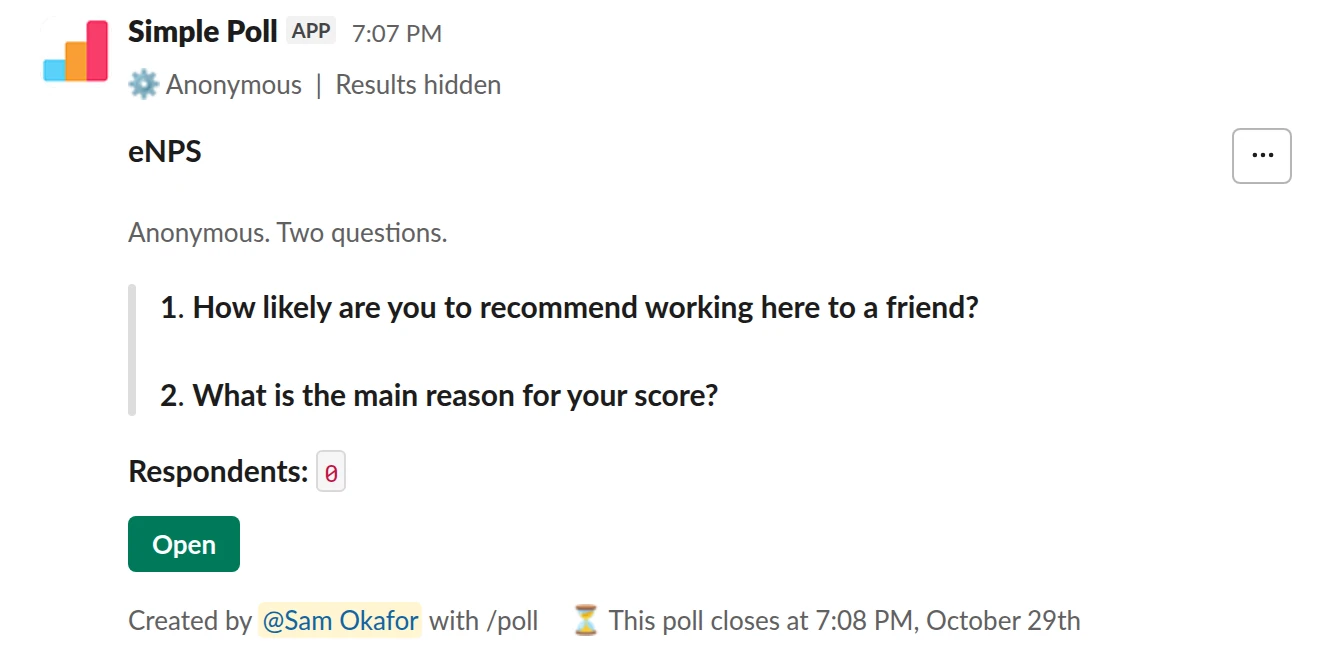
Survey (2 questions). The full eNPS survey. One 0 to 10 score, one optional reason, results private to you.
/poll "eNPS" "Anonymous. Two questions." anonymous show results to creator close after 7 days remind 1 day before closing --- "How likely are you to recommend working here to a friend?" "0" "1" "2" "3" "4" "5" "6" "7" "8" "9" "10" limit 1 --- "What is the main reason for your score?" short text optional
Premium: surveys (several questions), more than 5 options, closing automatically, reminders, results for the creator only
AnonymousShow results: only visible to youClose automatically: after 7 daysReminder: 24 hours before closing
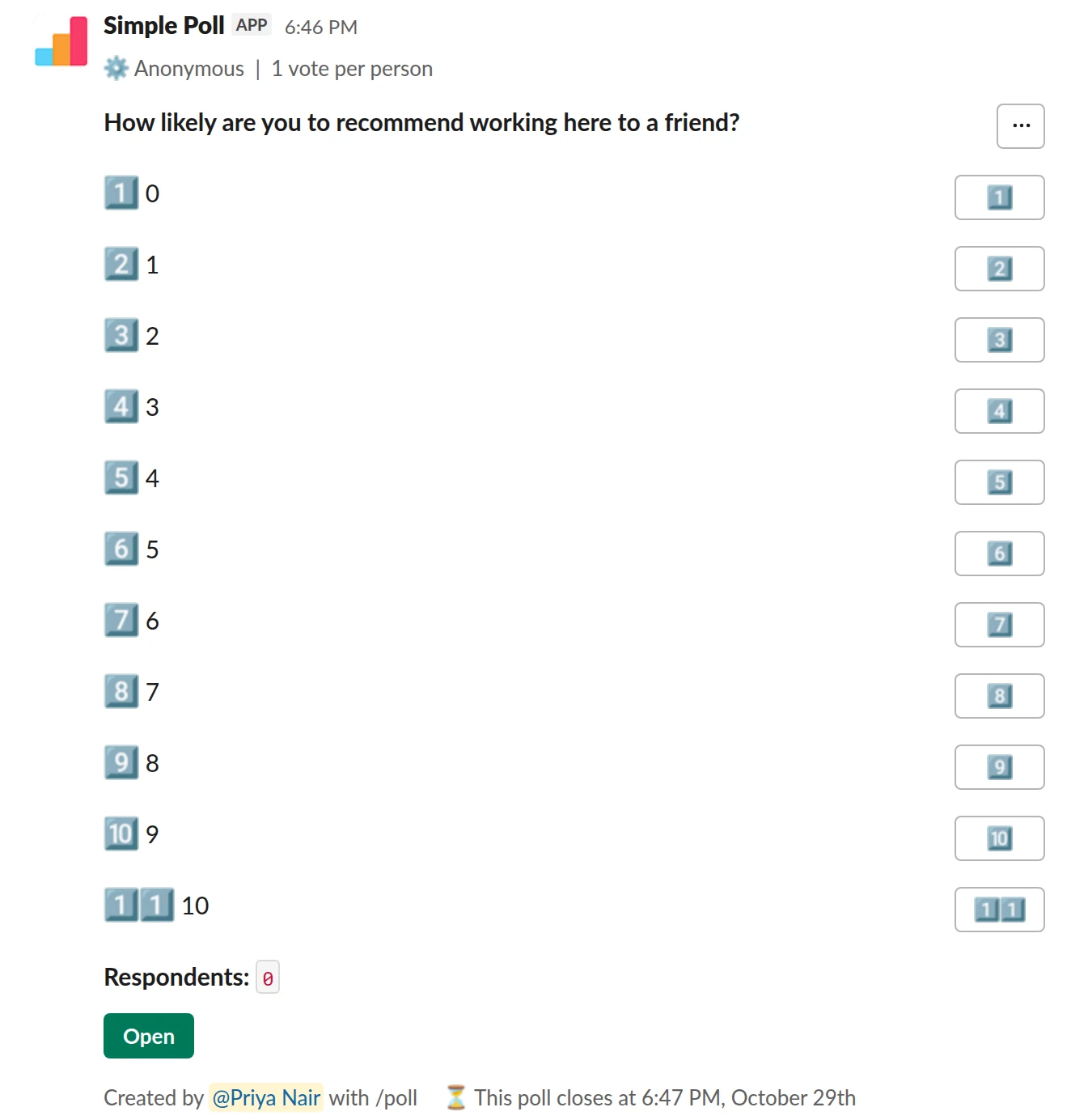
Choice poll. The score on its own, if you collect the reasons another way.
/poll "How likely are you to recommend working here to a friend?" "0" "1" "2" "3" "4" "5" "6" "7" "8" "9" "10" anonymous limit 1 close after 7 days
Premium: more than 5 options, vote limits, closing automatically
AnonymousLimit votes: 1 per personClose automatically: after 7 days
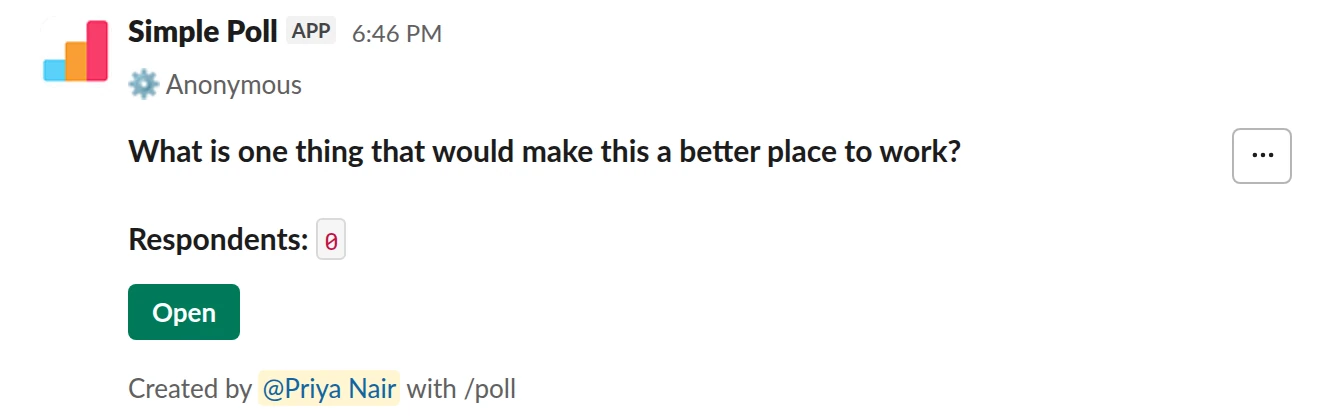
Short text with voting. A follow-up after you share the score. People upvote the suggestions they agree with.
/poll "What is one thing that would make this a better place to work?" short text :thumbsup: anonymous
Free
Anonymous
How to word it
Use the standard wording so your scores stay comparable over time: "How likely are you to recommend [company] as a place to work?" with options 0 to 10. Keep all eleven options. Grouping them into three buckets changes what people answer.
Add one optional free-text follow-up: "What is the main reason for your score?" Make the
whole survey anonymous and say so in the description. Add limit 1 to the 0 to 10
question so everyone gives one score.
Eleven options and limit 1 are Premium features, and so is a multi-question survey.
When to send it
Quarterly is the usual rhythm. Monthly is too often for a question whose answer rarely changes that fast. Avoid the week of a reorg, layoffs or bonus news: you'll measure the news, not the company.
Leave it open for a few days, close after 7 days (Premium), with a reminder before it
closes. Post it in a channel everyone is in.
How to calculate and use the score
Export the results, then: eNPS = % of 9s and 10s minus % of 0s to 6s. 7s and 8s count toward the total but neither side. With 40 answers, 18 promoters and 10 detractors, the score is 45% minus 25%, so +20.
Compare your score to your own last quarter, not to other companies. Then read the follow-up answers from detractors and passives and group them into themes. That list is your agenda.
The mistake people make
Showing results live. Early answers anchor later ones. Add show results to creator
(Premium) so only you see the results, then share the score and the themes yourself.
Questions
Why not a 1 to 5 scale?
eNPS is defined on 0 to 10. A Simple Poll scale question is 1 to 5, so use eleven
options with limit 1 instead.
Is the survey anonymous?
With anonymous, nobody sees who answered what, including you. Answers to the score and
the reason still stay together per person, so you can read the reasons behind low scores.
How do I get the numbers out to calculate the score?
On Premium, the poll's creator can export results as a CSV from the poll's settings.
What's the difference between eNPS and NPS?
NPS asks customers whether they'd recommend your product. eNPS asks employees whether they'd recommend the company as an employer. See employee net promoter score.
Used by
Related
- What is eNPS (employee Net Promoter Score)?
Employee Net Promoter Score (eNPS) asks employees how likely they are to recommend their company as a place to work, on a scale from 0 to 10. The score is the percentage of promoters (9 or 10) minus the percentage of detractors (0 to 6), so it runs from -100 to +100.
- What is Net Promoter Score (NPS)?
Net Promoter Score (NPS) is a loyalty metric built on one question: how likely are you to recommend us to a friend or colleague, answered from 0 to 10. NPS is the percentage of promoters (9 or 10) minus the percentage of detractors (0 to 6), so it runs from -100 to +100.
- Weekly pulse survey for Slack
When an annual engagement survey is too slow to catch problems and you want a light, regular read on how the team is doing.
- Gallup Q12-style engagement survey for Slack
When you want a structured engagement check covering the basics of a good job, without sending people to a separate survey tool.
- Slack polls for HR and People teams
People teams ask the whole company for input more than anyone else, which makes them the first to burn out a channel with surveys. The fix is a small, predictable calendar: a few polls with a clear job each, sent at the same rhythm, with results that go somewhere.