Example polls
Paste any of these into the message box in Slack.
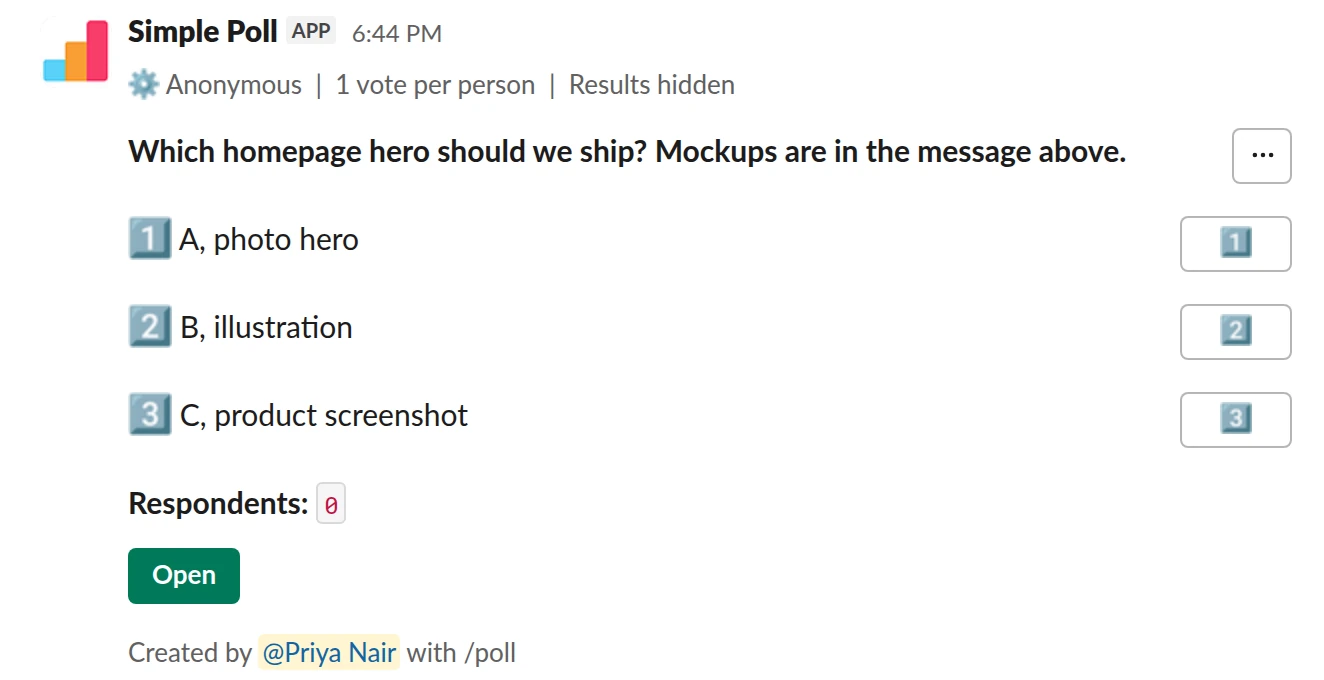
Choice poll. The core vote. One pick each, anonymous, results hidden until you close it.
/poll "Which homepage hero should we ship? Mockups are in the message above." "A, photo hero" "B, illustration" "C, product screenshot" limit 1 hide results anonymous
Premium: vote limits
AnonymousLimit votes: 1 per personShow results: hidden until poll closes
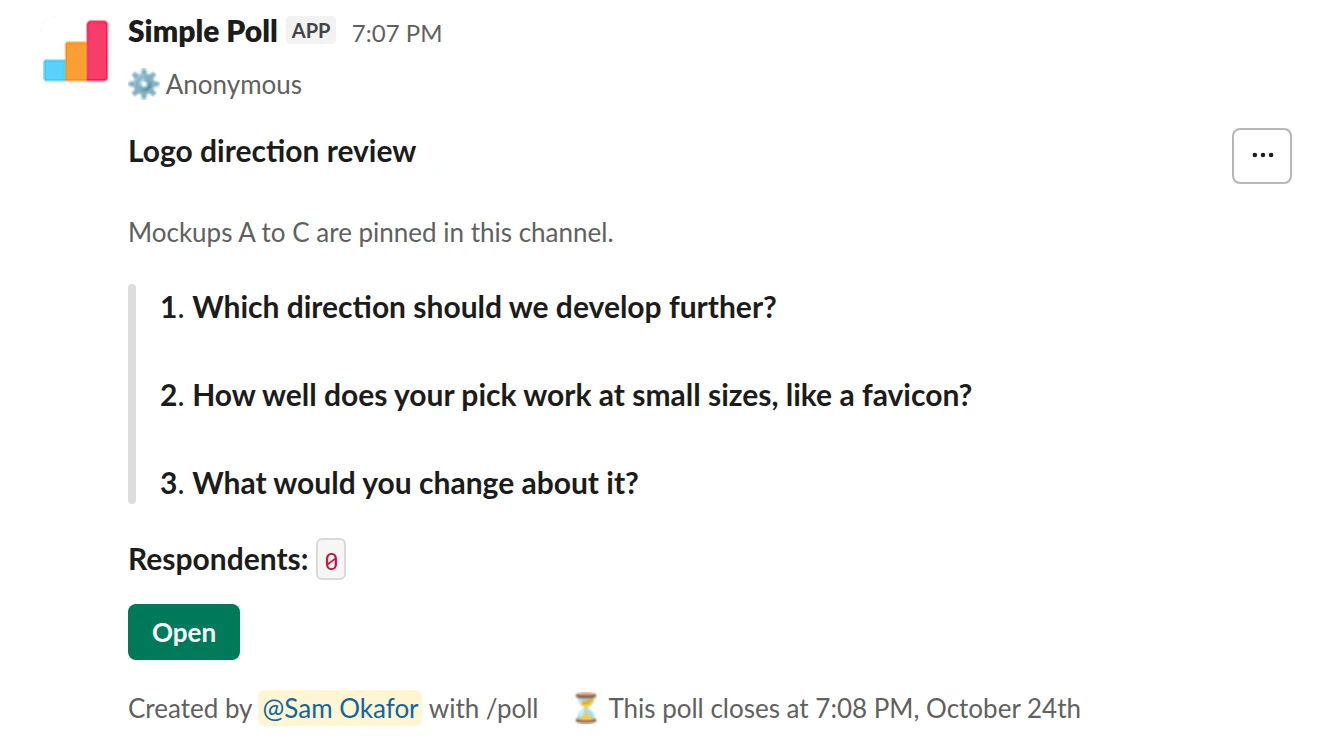
Survey (3 questions). A structured review survey with the pick, a rating and comments.
/poll "Logo direction review" "Mockups A to C are pinned in this channel." anonymous close after 2 days --- "Which direction should we develop further?" "A" "B" "C" limit 1 --- "How well does your pick work at small sizes, like a favicon?" "Not at all" "Poorly" "OK" "Well" "Very well" scale --- "What would you change about it?" short text optional
Premium: surveys (several questions), closing automatically
AnonymousClose automatically: after 2 days
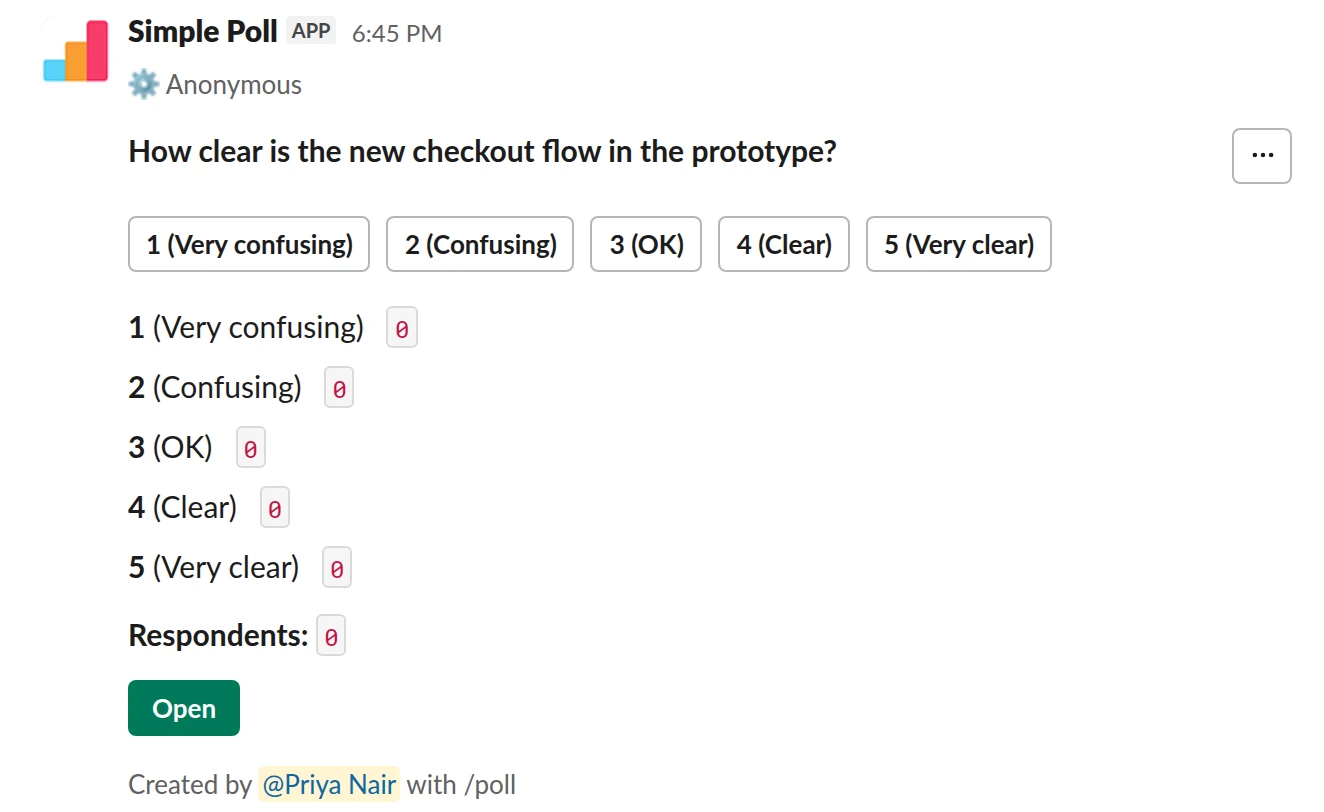
Scale from 1 to 5. A quick rating when there is only one direction to review.
/poll "How clear is the new checkout flow in the prototype?" "Very confusing" "Confusing" "OK" "Clear" "Very clear" scale anonymous
Free
Anonymous
Set it up
Share the designs as images or a link to the file, each clearly labelled. Name the options in the poll after the labels plus a two- or three-word description ("A, photo hero"), so voters can match them without scrolling back.
Say what you are deciding and what is already fixed: "We're choosing the hero layout. Copy and colours are final." Otherwise you get feedback on the wrong things.
Avoid the bandwagon
Early votes pull later ones. Add hide results so voters can't see the count while the poll is open, and anonymous if the designer's manager is in the channel. Then close it in Slack and reveal the results when you are ready to discuss them.
Ask for reasons, not just votes
A vote tells you which option won, not what to fix in it. Use a short survey (Premium): one single-choice question for the pick, one rating for how clearly the winning direction does its job, and one optional free-text question. You will get far more usable notes than from an open thread.
What to do with the results
A designer is not bound by the count. Use the vote to see where the team is and the comments to see why, then make the call and post it with a one-line reason. If the vote is split close to evenly, that usually means both directions solve the problem, so pick the cheaper one to build.
Questions
Can I put images inside the poll options?
The options are text. Post the images in the message or thread above the poll, label them, and use the labels as options. Slack formatting and links work inside options, so you can also link each option to its file.
How do I stop people seeing the votes before everyone has voted?
Add hide results. Voters won't see the count while the poll is open. When you close the poll in Slack you can reveal the results.
Should design votes be anonymous?
When seniority is in the room, yes. Otherwise people vote for what they think the senior person likes.
Used by
Related
- How to hide poll results until the poll closes
When people can see a running tally, they tend to pile onto the leading option or skip voting once the result looks settled. Hiding the results until the poll closes gets you each person's own answer. In Simple Poll it's one keyword, and it works on every plan.
- How to create an anonymous poll in Slack
An anonymous poll in Simple Poll hides who voted for what from everyone, including the person who created it. The poll still counts every vote and shows the totals. It's free on every plan.
- Feature prioritization poll for Slack
When you have more candidate features than capacity and need the team, or your stakeholders, to put them in order.
- Project name poll for Slack
When a project, team, channel or internal tool needs a name and you want ideas from more people than the ones in the room.
- Slack polls for product teams
Product managers spend a lot of time getting a room to agree. A well-built poll does part of that work in Slack: it shows where people actually stand before the meeting, so the meeting can be about the disagreement instead of discovering it.