Example polls
Paste any of these into the message box in Slack.
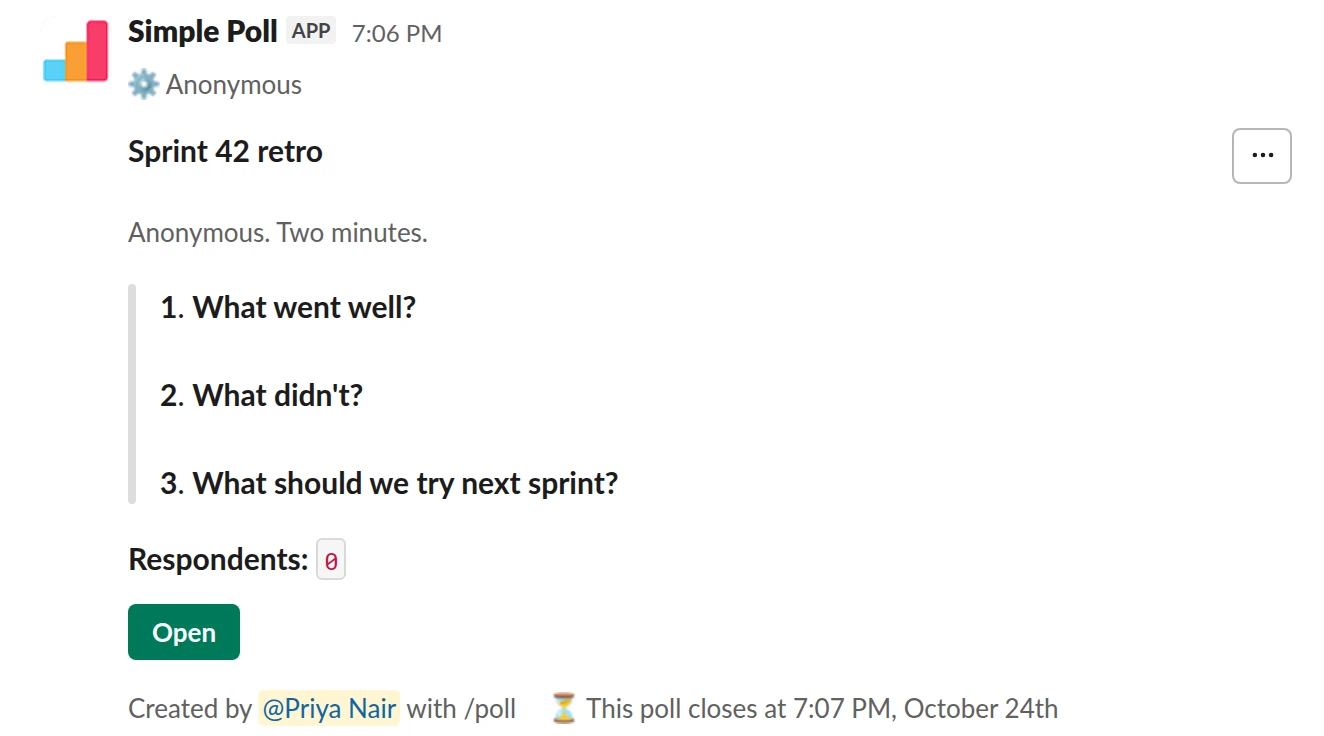
Survey (3 questions). Anonymous retro input, collected before the meeting.
/poll "Sprint 42 retro" "Anonymous. Two minutes." anonymous close after 2 days --- "What went well?" short text --- "What didn't?" short text --- "What should we try next sprint?" short text optional
Premium: surveys (several questions), closing automatically
AnonymousClose automatically: after 2 days
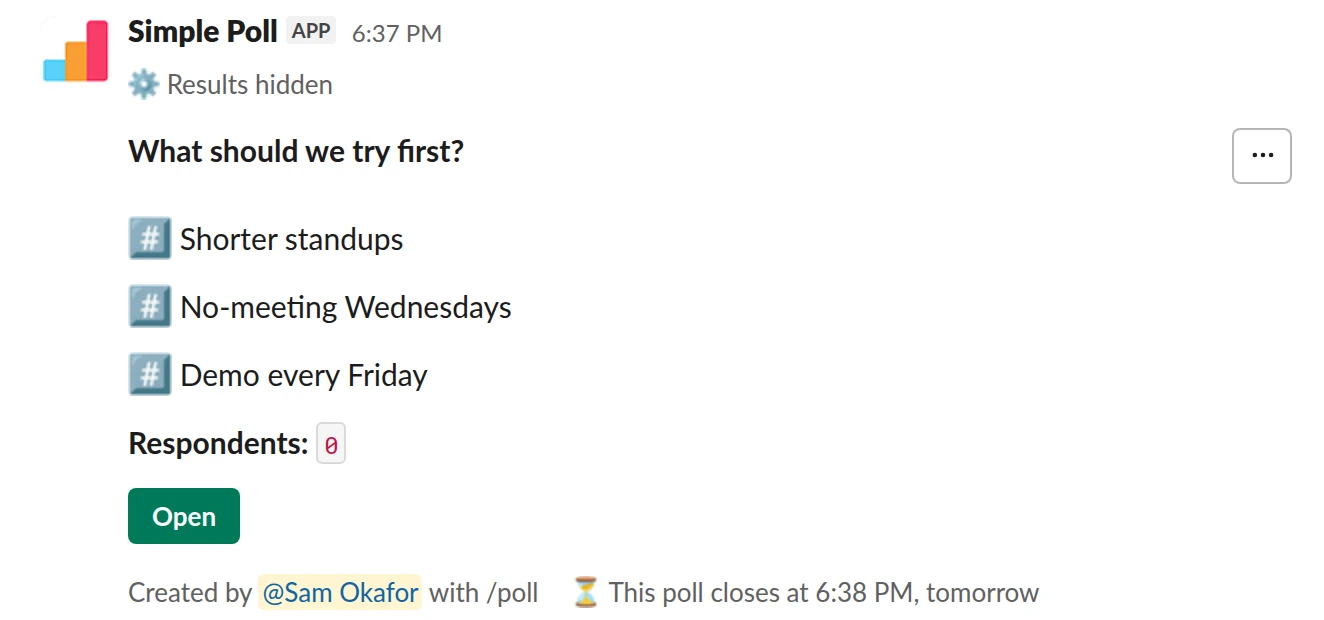
Ranked poll. The follow-up vote on the top suggestions.
/poll "What should we try first?" "Shorter standups" "No-meeting Wednesdays" "Demo every Friday" ranked close after 1 day
Premium: closing automatically
Close automatically: after 1 day
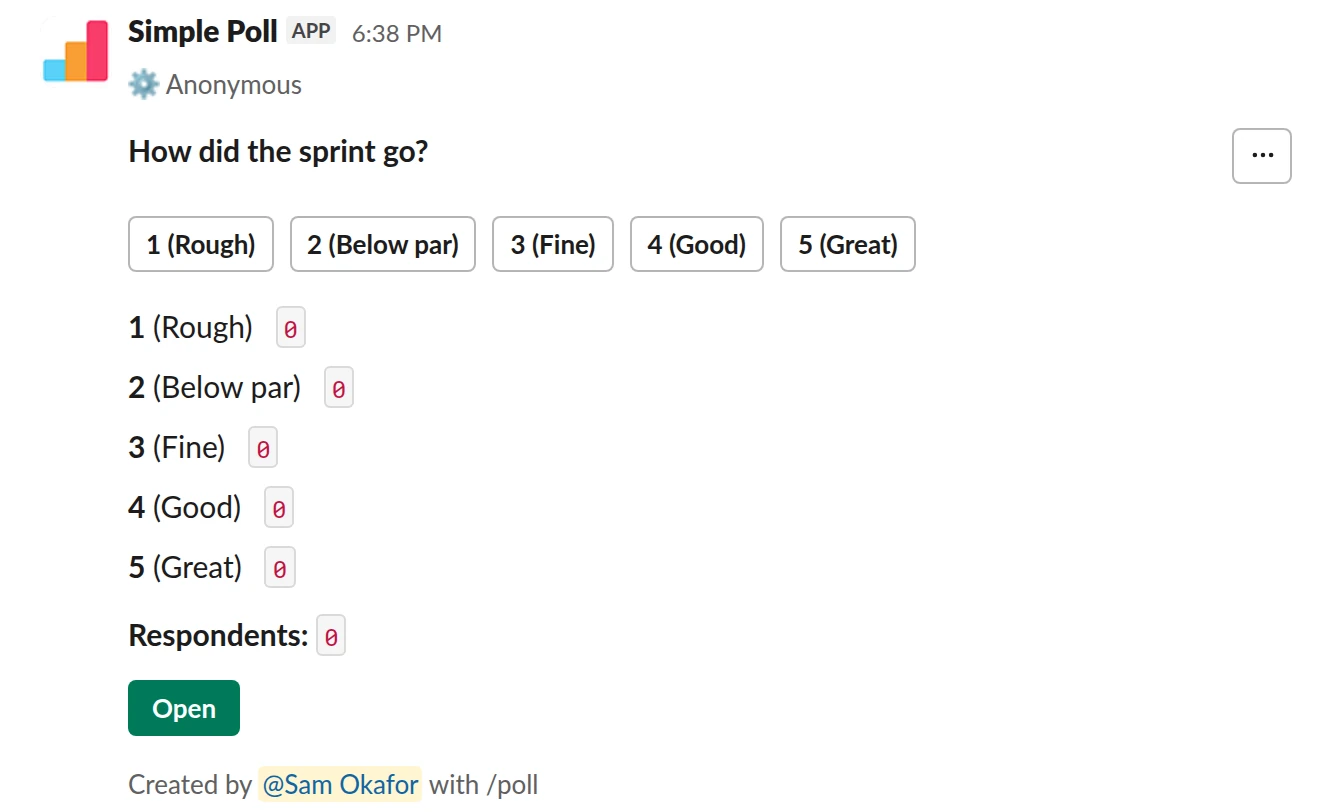
Scale from 1 to 5. A one-question sprint rating to track from retro to retro.
/poll "How did the sprint go?" "Rough" "Below par" "Fine" "Good" "Great" scale anonymous
Free
Anonymous
How a retro works
Most retros follow the same three steps:
- Gather input: what went well, what didn't, what to change.
- Group and discuss: cluster the input into themes and talk about the big ones.
- Pick actions: one to three concrete changes, each with an owner, to try in the next sprint.
The Scrum Guide caps the retro at three hours for a one-month sprint, and shorter for shorter sprints.
Running the input step in Slack
Collecting input in the meeting means the loudest voices fill the board. Collecting it beforehand, anonymously, gets everyone's view and saves meeting time.
With Simple Poll, post an anonymous survey (Premium) a day or two before the meeting with
short text questions, and close after so it's finished when you meet. In the meeting,
group the answers into themes, count them, and quote a few word for word. Then put the top
suggestions to a ranked vote to pick the first action.
Teams that are fully async can run the whole retro this way.
The mistake people make
Ending without an action, or with ten. Pick one to three changes, name an owner, and open the next retro by checking whether they happened. If the same problem shows up three retros running, the actions aren't working.
Questions
Should retro input be anonymous?
Usually, yes. People name problems more readily without their name attached, especially problems involving colleagues or managers.
Is a retrospective the same as a post-mortem?
They're related. A retro is regular, at the end of every iteration. A post-mortem usually follows one incident or project.
Related
- Sprint retrospective poll for Slack
At the end of every sprint, before the retro meeting, so people can answer honestly and you walk in with the themes already on the table.
- What is psychological safety?
Psychological safety is "a shared belief held by members of a team that the team is safe for interpersonal risk taking", as Amy Edmondson defined it in 1999. In practice: people can ask, disagree, admit mistakes and raise problems without fear of embarrassment or punishment.
- What is an open-ended question?
An open-ended question lets people answer in their own words instead of choosing from a list. It surfaces things you didn't think to ask about, at the cost of answers you have to read and group yourself.
- Slack polls for engineering teams
Engineers will answer a poll if it takes ten seconds and replaces a meeting. They will ignore one that reads like an HR form. The polls that stick in engineering channels are short, tied to the sprint, and end in a decision someone acts on.